A digital tool that transforms citizen testimonies into structured, representative data — so decision makers invest where it matters most.
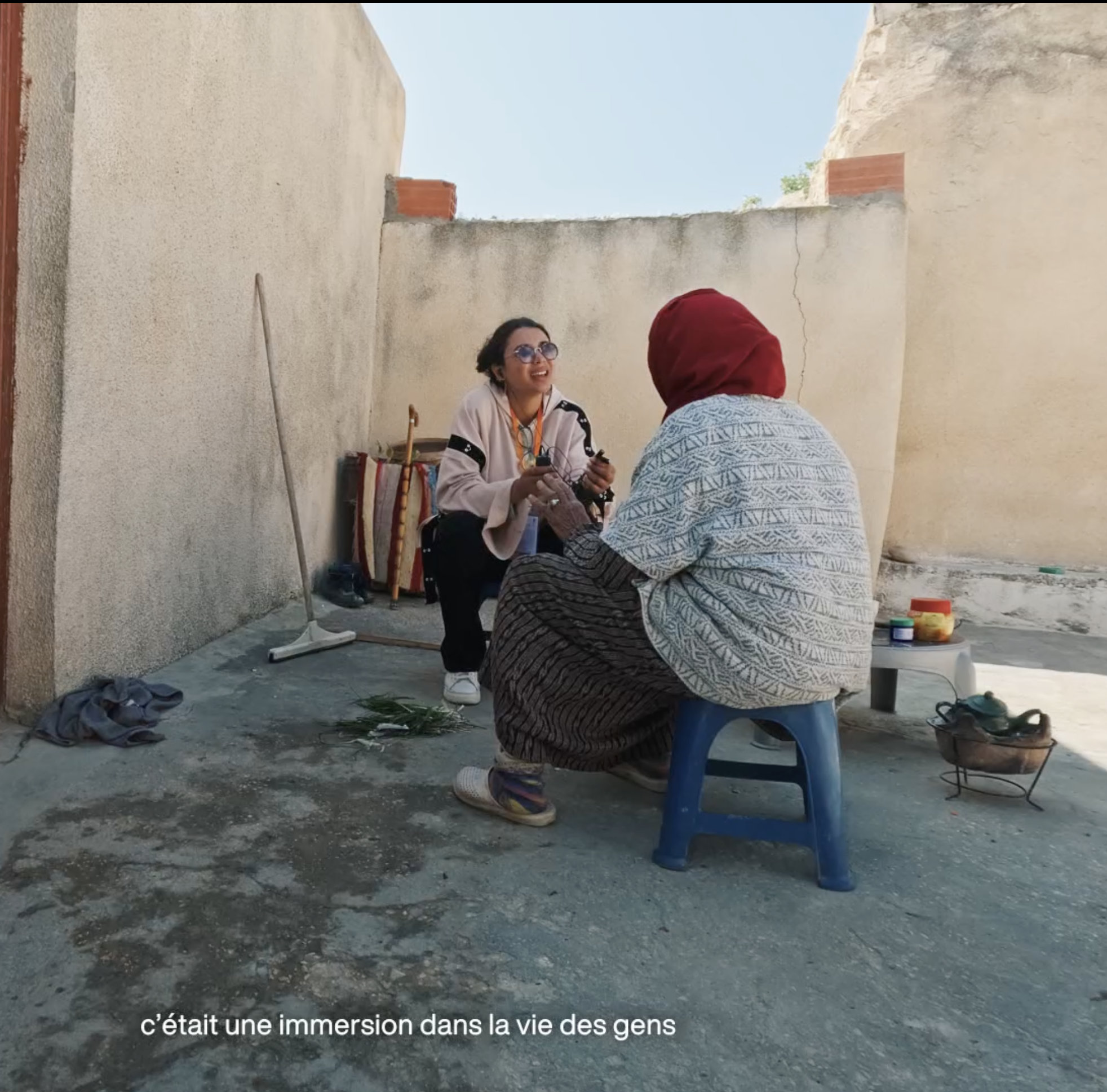
"It was an immersion into people's lives."— Field interviewer, 2024
Development plans fill with expensive infrastructure that doesn't match what people actually need. Public data is decontextualized, top-down, and rarely includes knowledge from citizens themselves.
Institutions invest in solutions based on assumptions rather than lived experience. The gap between policy and reality wastes resources and erodes trust.
Public data is often top-down, aggregated to the point where local nuance disappears. The people closest to the problems are the least represented in the datasets that shape their futures.
Traditional surveys reduce complex lived realities into checkbox answers, losing the nuance that matters for meaningful action.
Obtaining representative results takes months of fieldwork and manual processing — by the time data arrives, the window for action may have closed.
They often miss the level of detail where potential solutions could actually emerge from collective wisdom. The richest insights stay buried.
We created a platform that allows organizations to listen to collective concerns and needs of citizens at large scale — then transforms them into reports and dashboards that let decision makers understand reality in a detailed, representative way.
The goal: help plan and improve the lives of inhabitants by showing where the smallest investments can create the greatest impact.
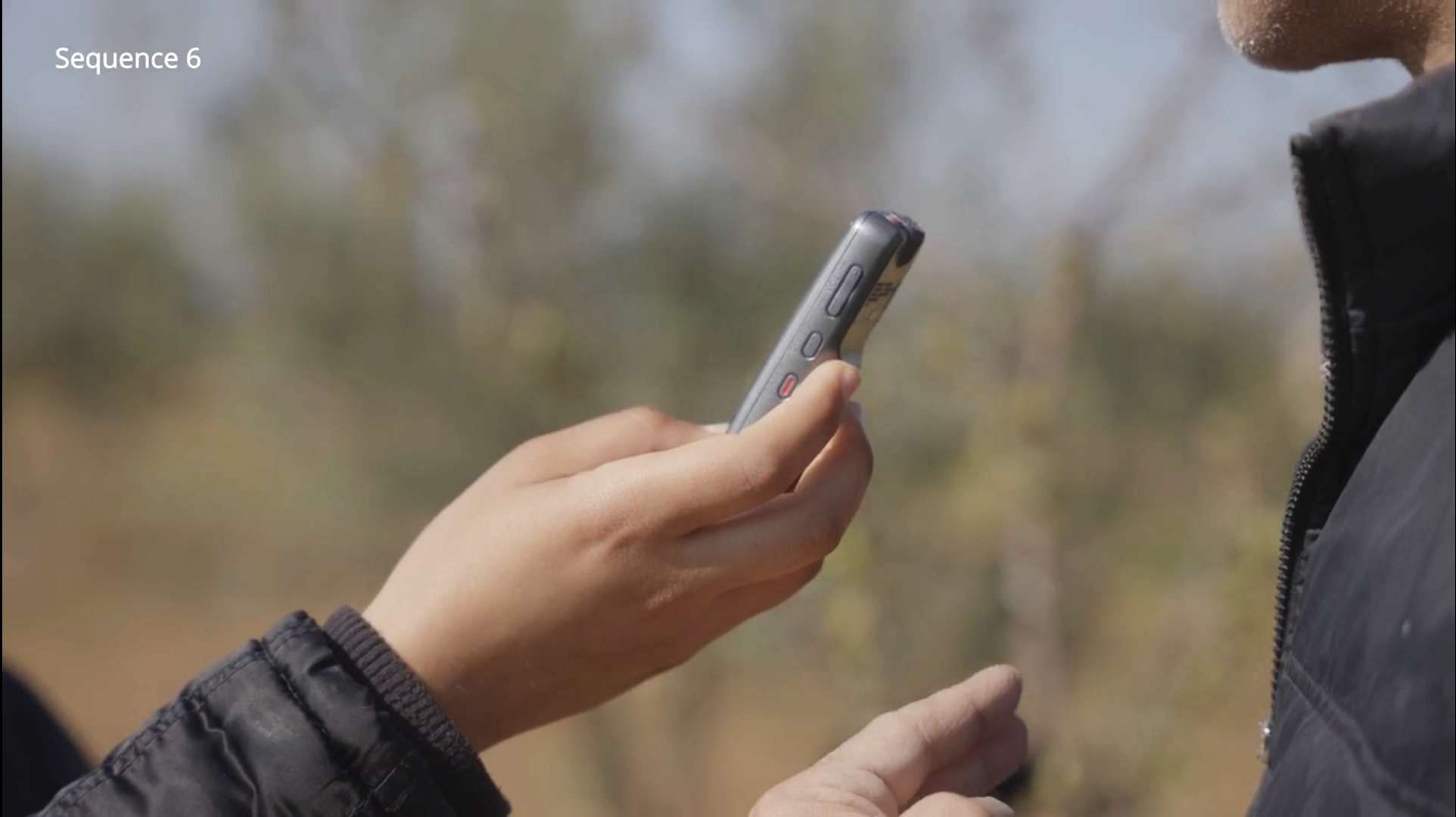
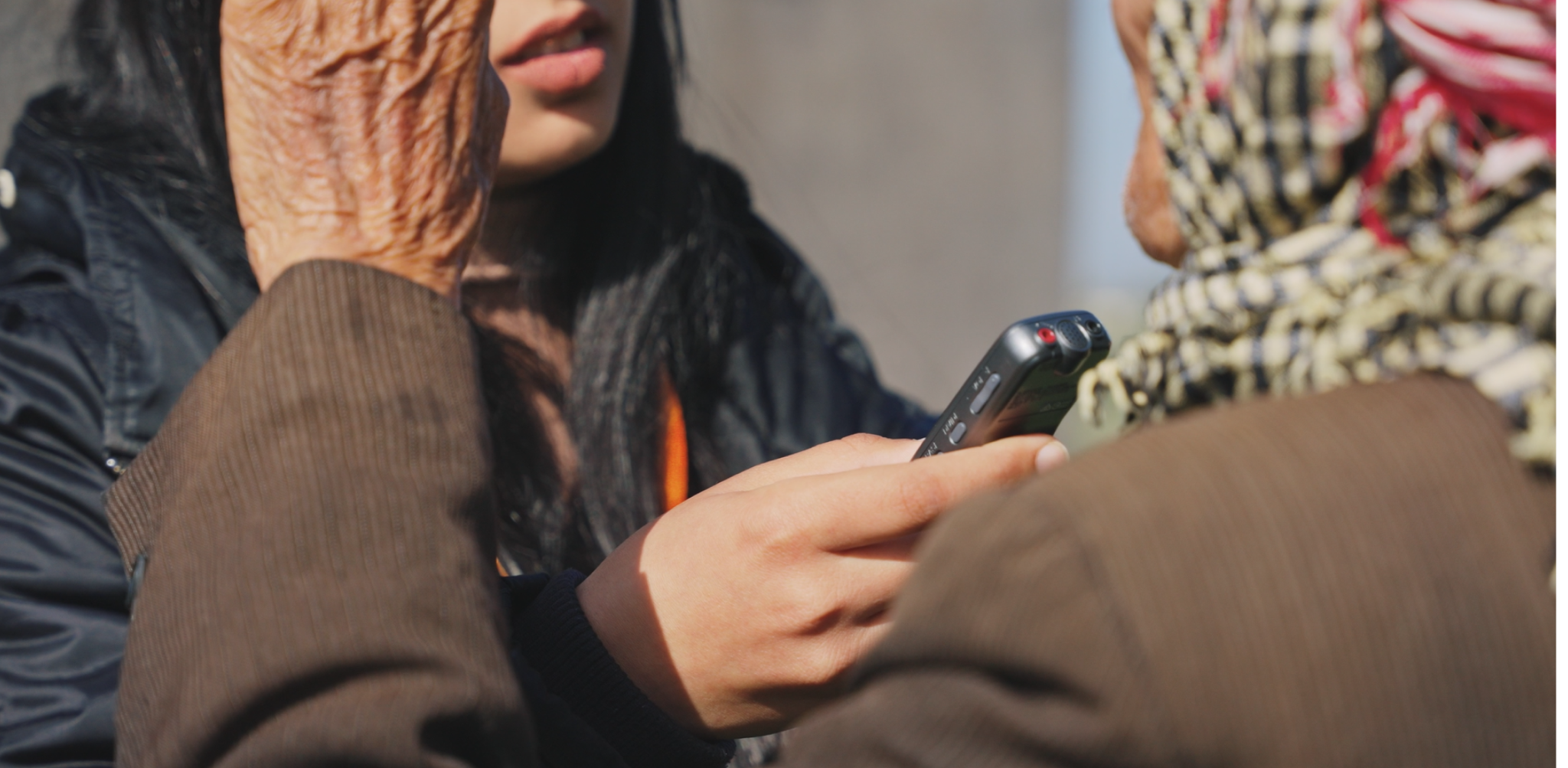
Explore the tool →The tool gathers people's testimonies in an open and oral way, enabling them to express freely around the topic of concern.

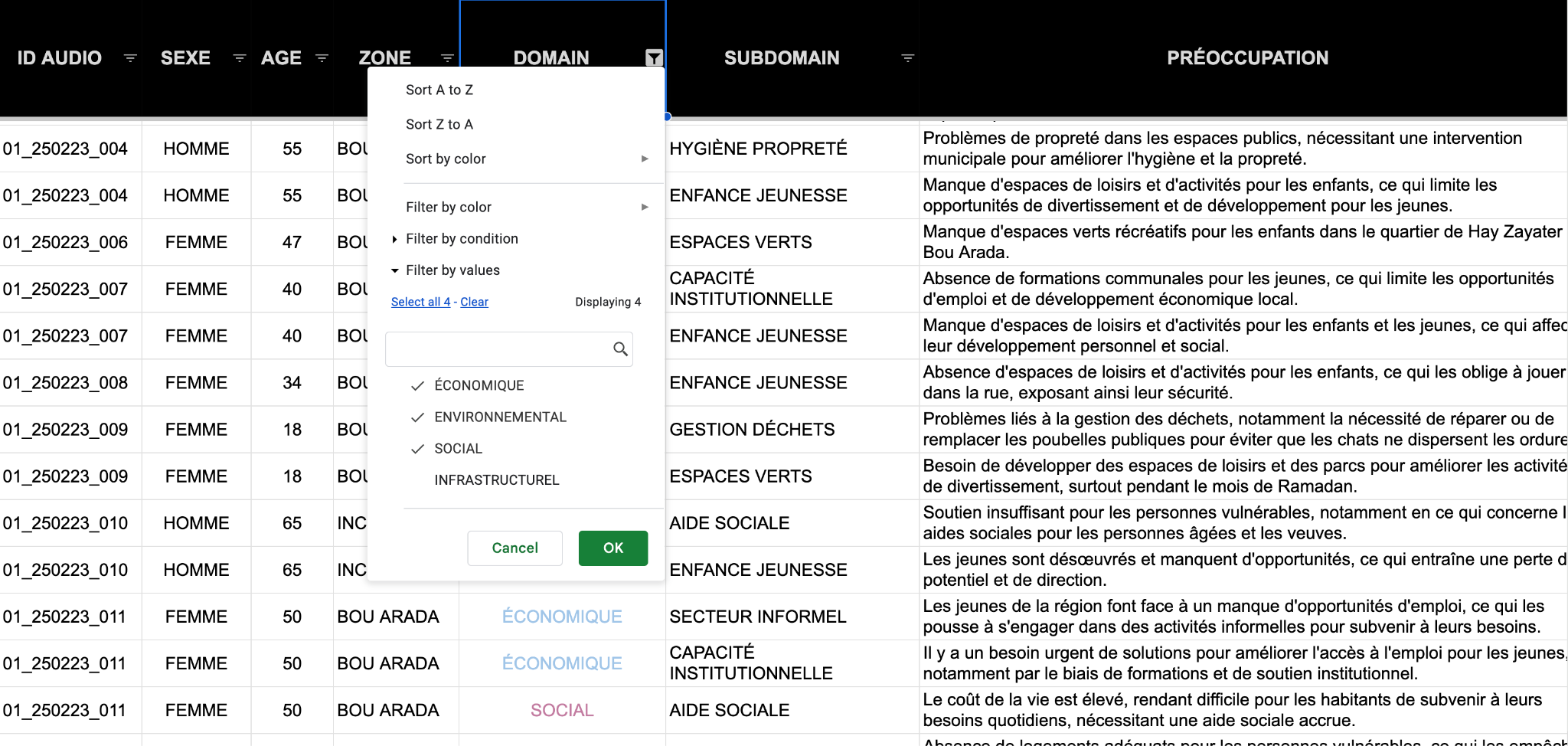
Audios become anonymized and processed into transcription, translation and categorization — automatically.

A structured database enables exploration of the full level of detail across demographics and domains.

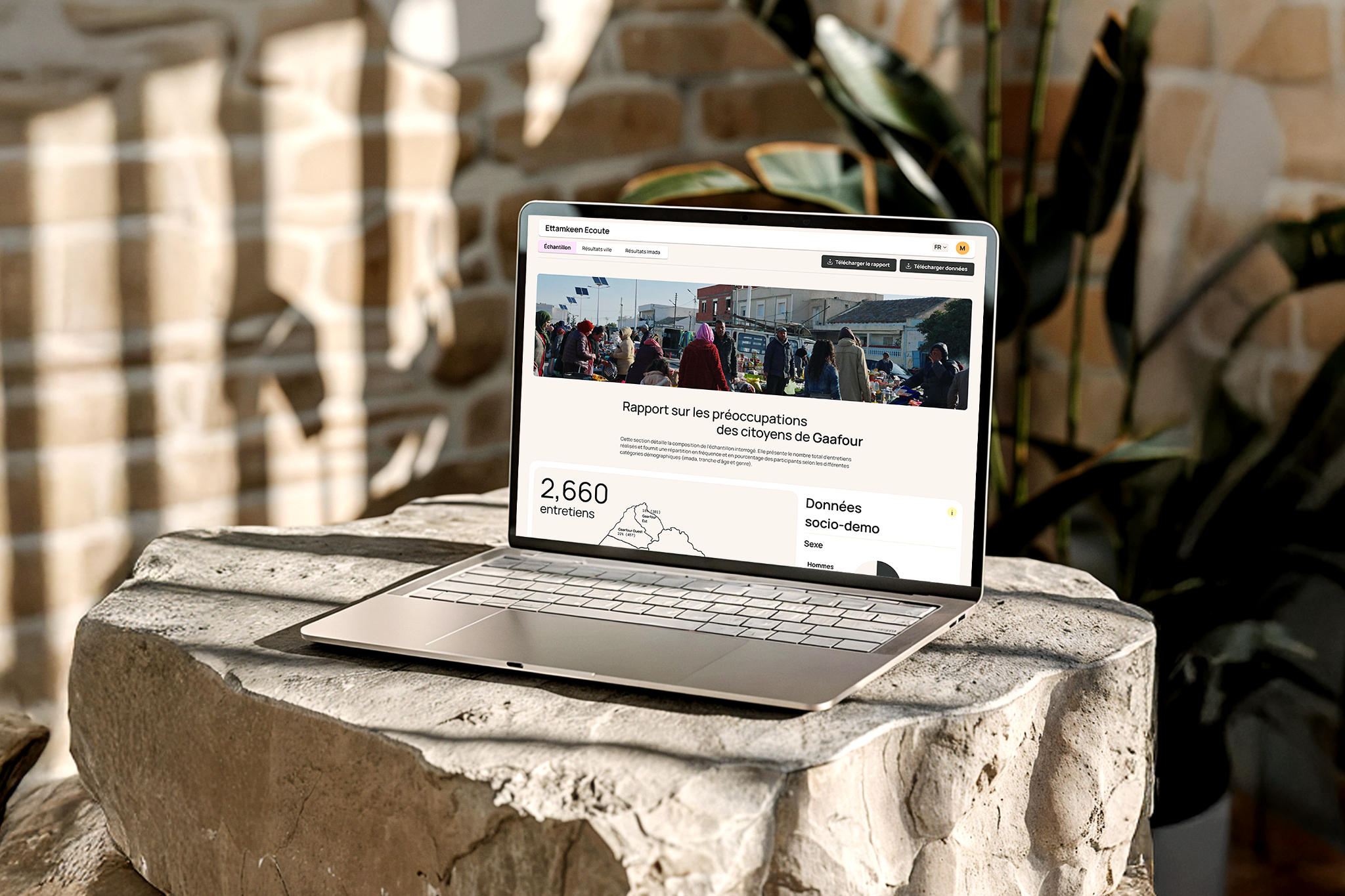
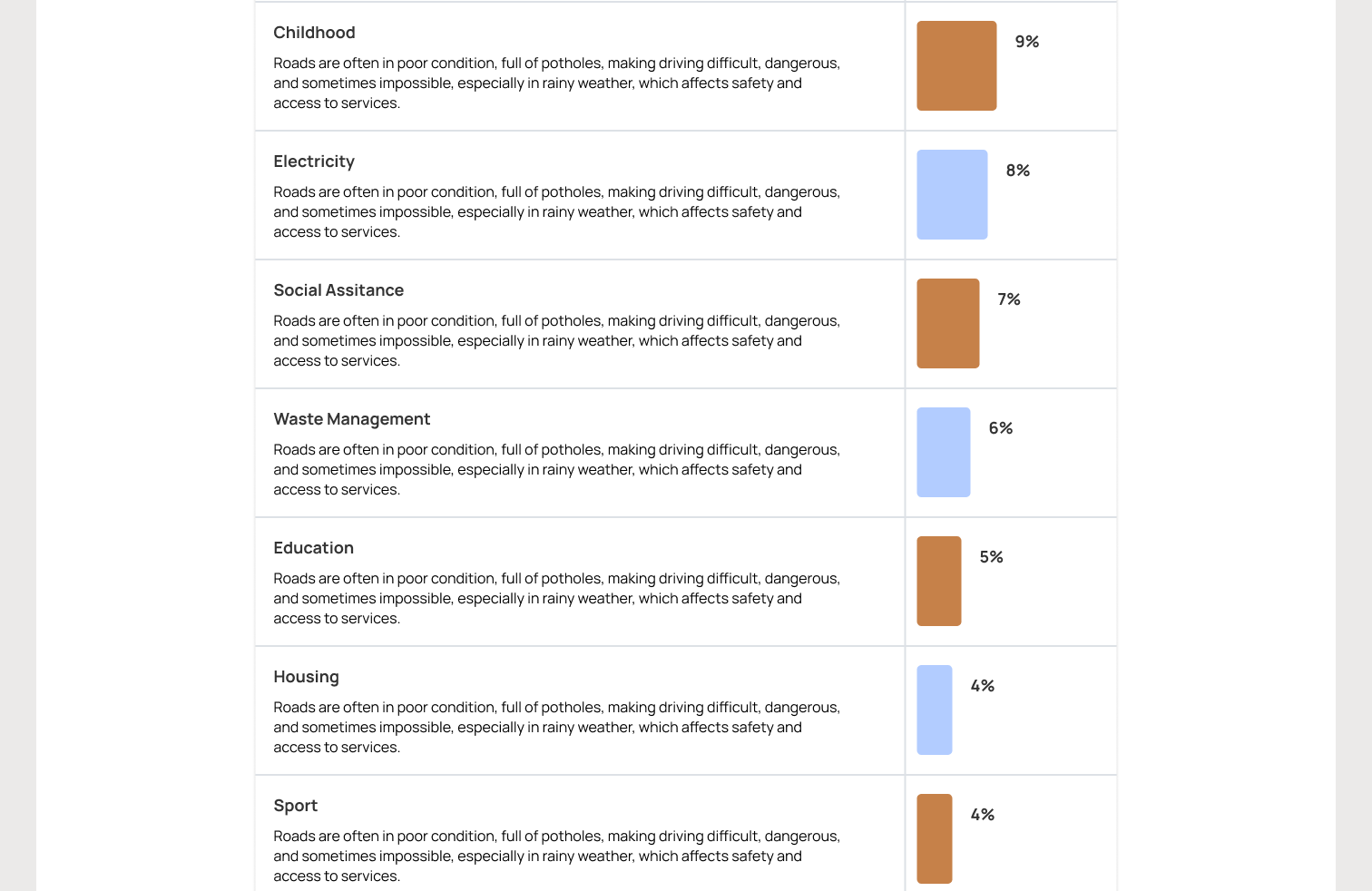
Interactive reports enable decision makers to better understand and plan actions that drive progress.

Every audio testimony goes through a six-step automated pipeline. The system transcribes, translates, and categorizes each recording — then structures it into a searchable database that feeds the final interactive reports. No manual processing. No data loss.
"It's impossible to grow food with this shortage of water… There are cuts every now and then and me, for instance, I have to buy water from my neighbour because, luckily he has a well, but it's very expensive. This is not sustainable."
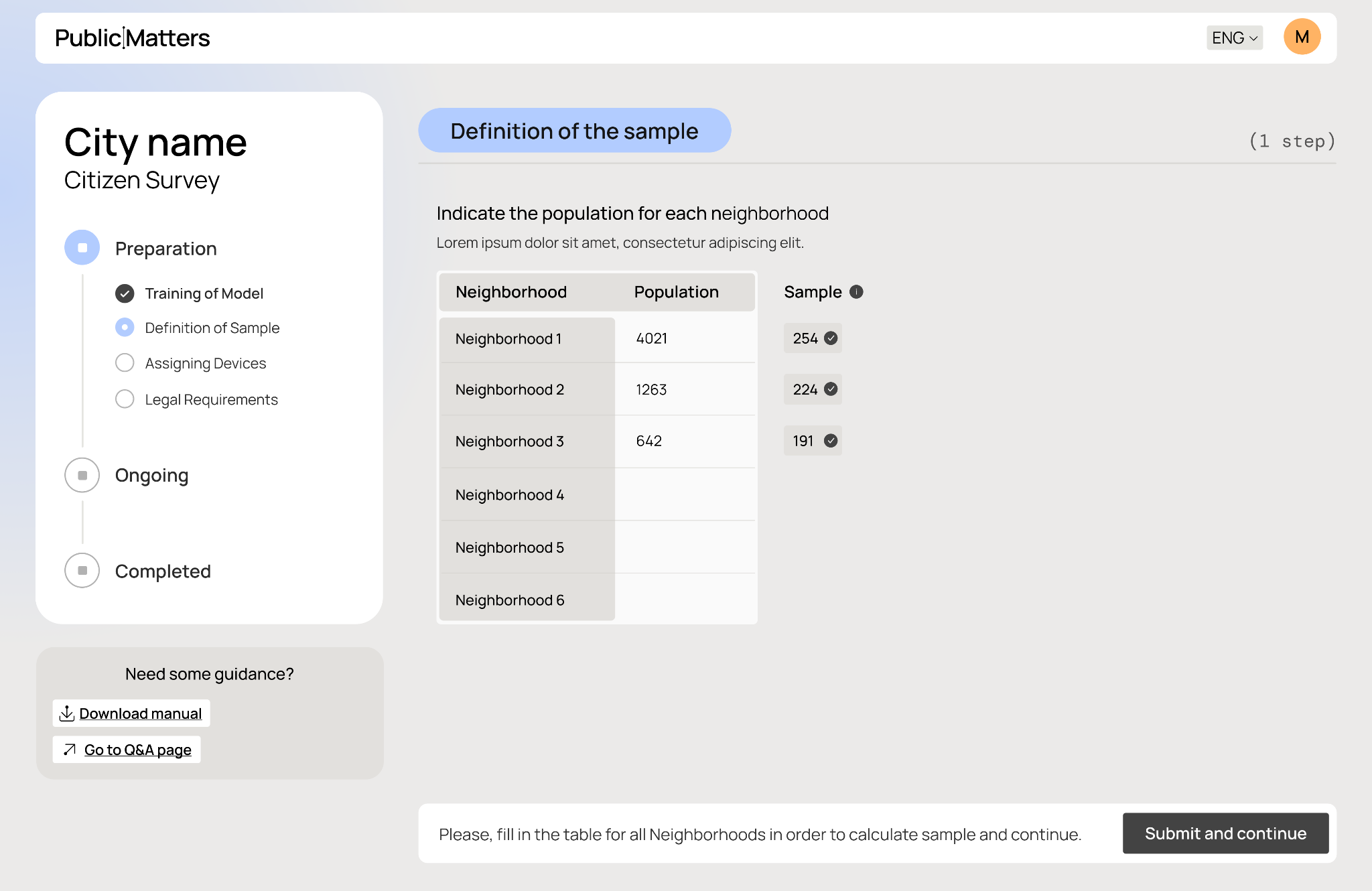
Admin users upload all necessary information to train the model, tailor it to the cultural context of the survey, define the sample, and plan the campaign. The system adapts to each region's language, concerns, and social dynamics.
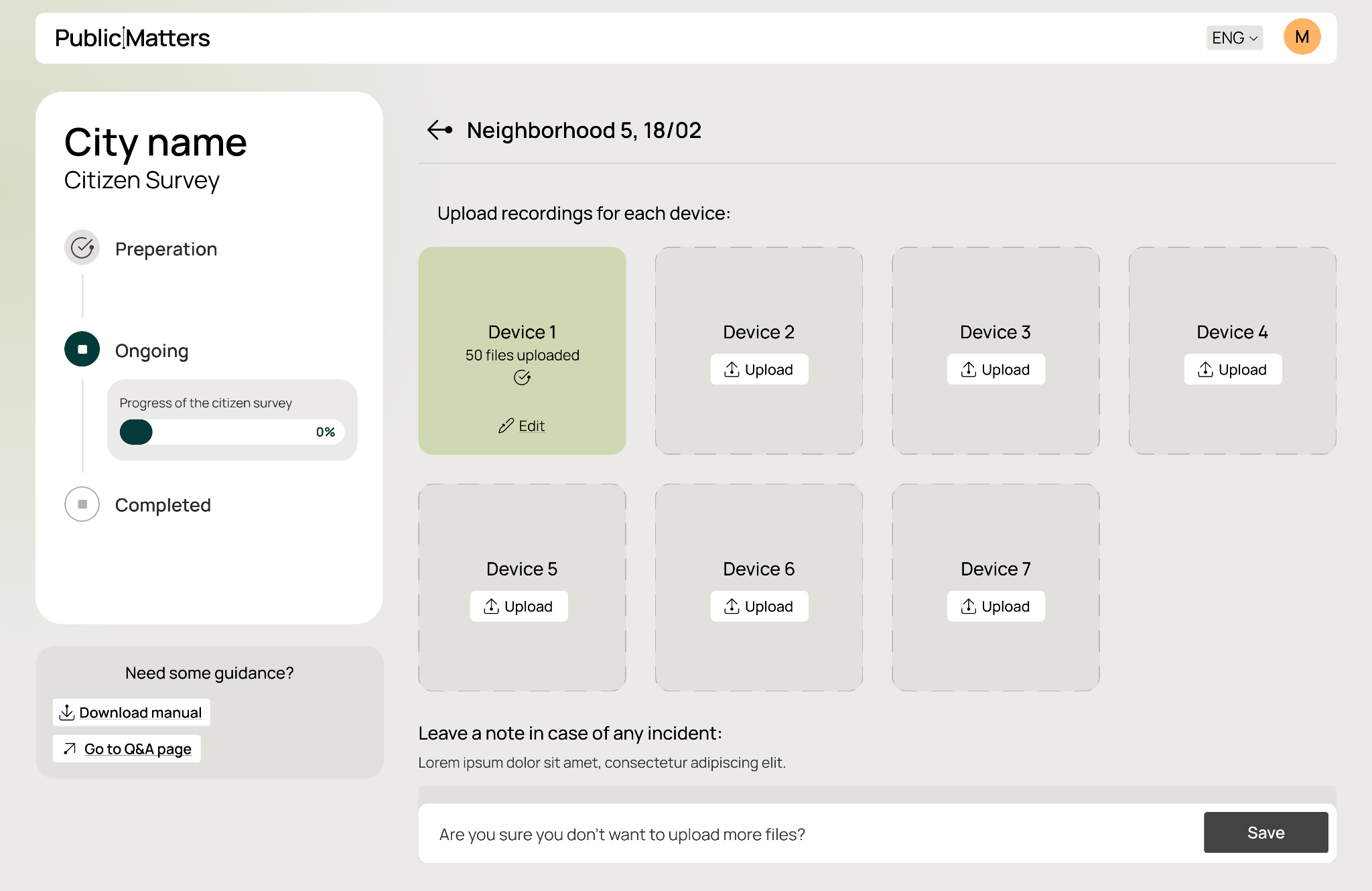
During the campaign, interviewers upload anonymized audio files to the platform, which are then transcribed, translated, and categorized automatically. The system processes testimonies in real time as fieldwork progresses.
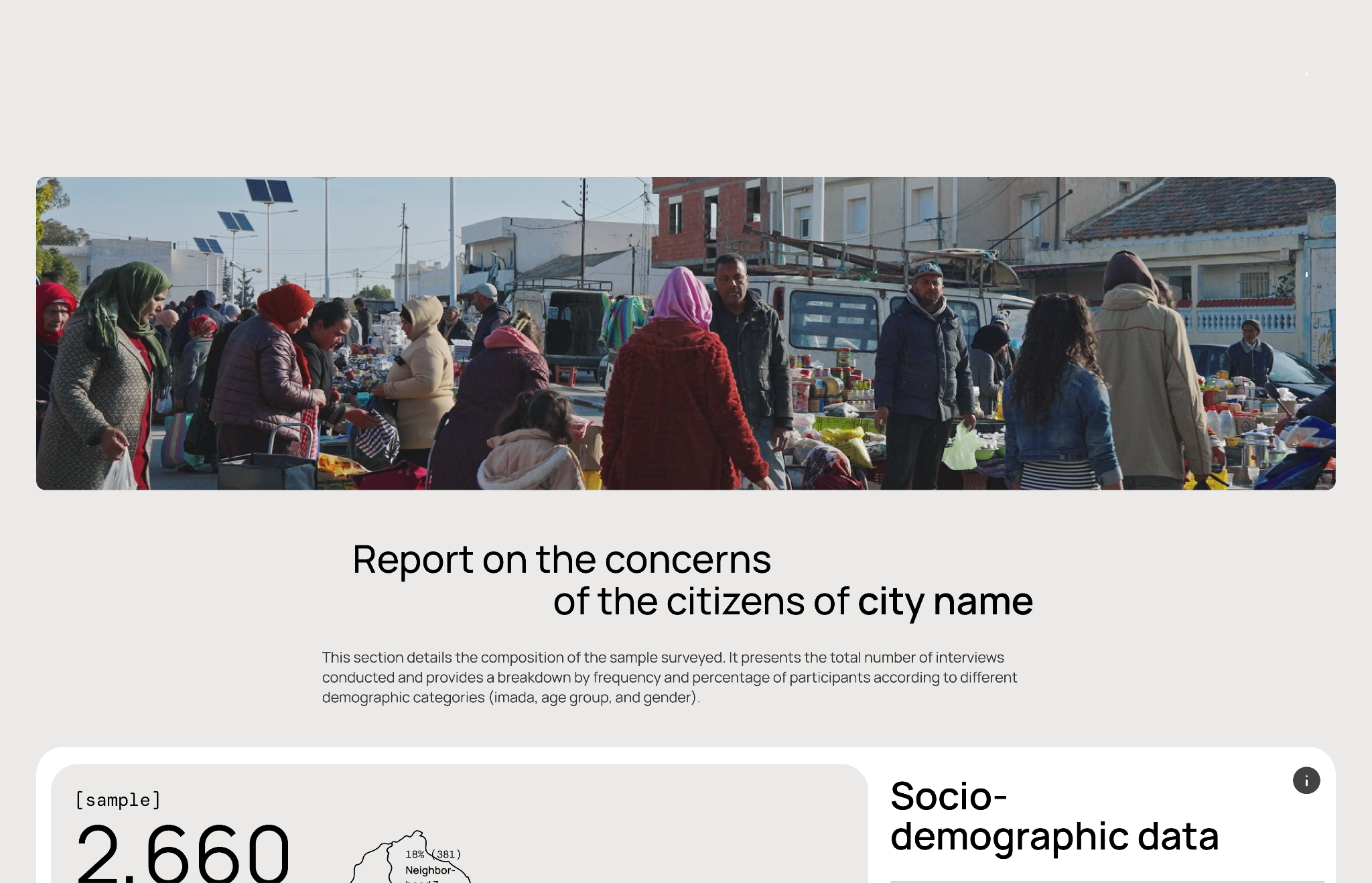
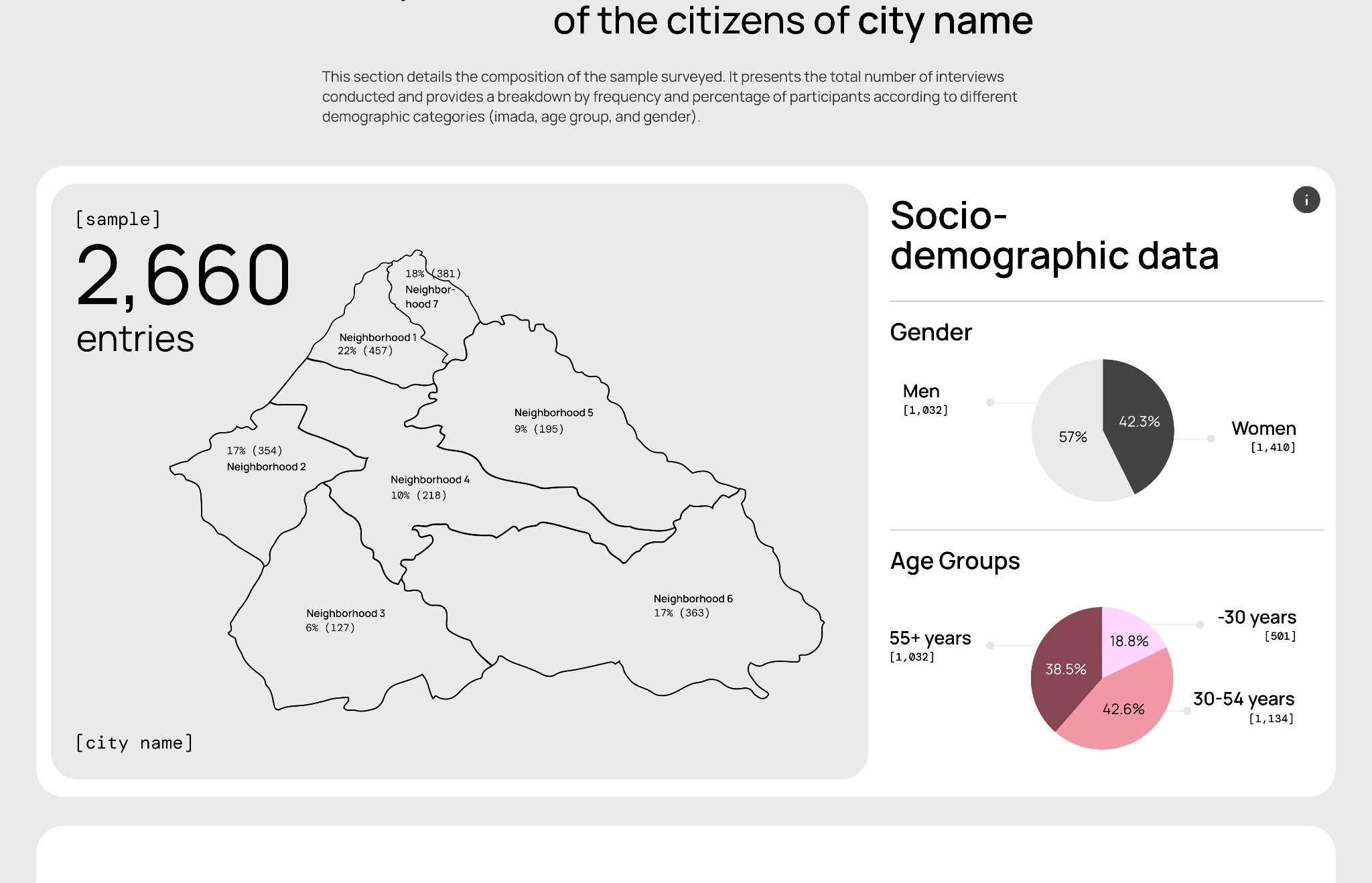
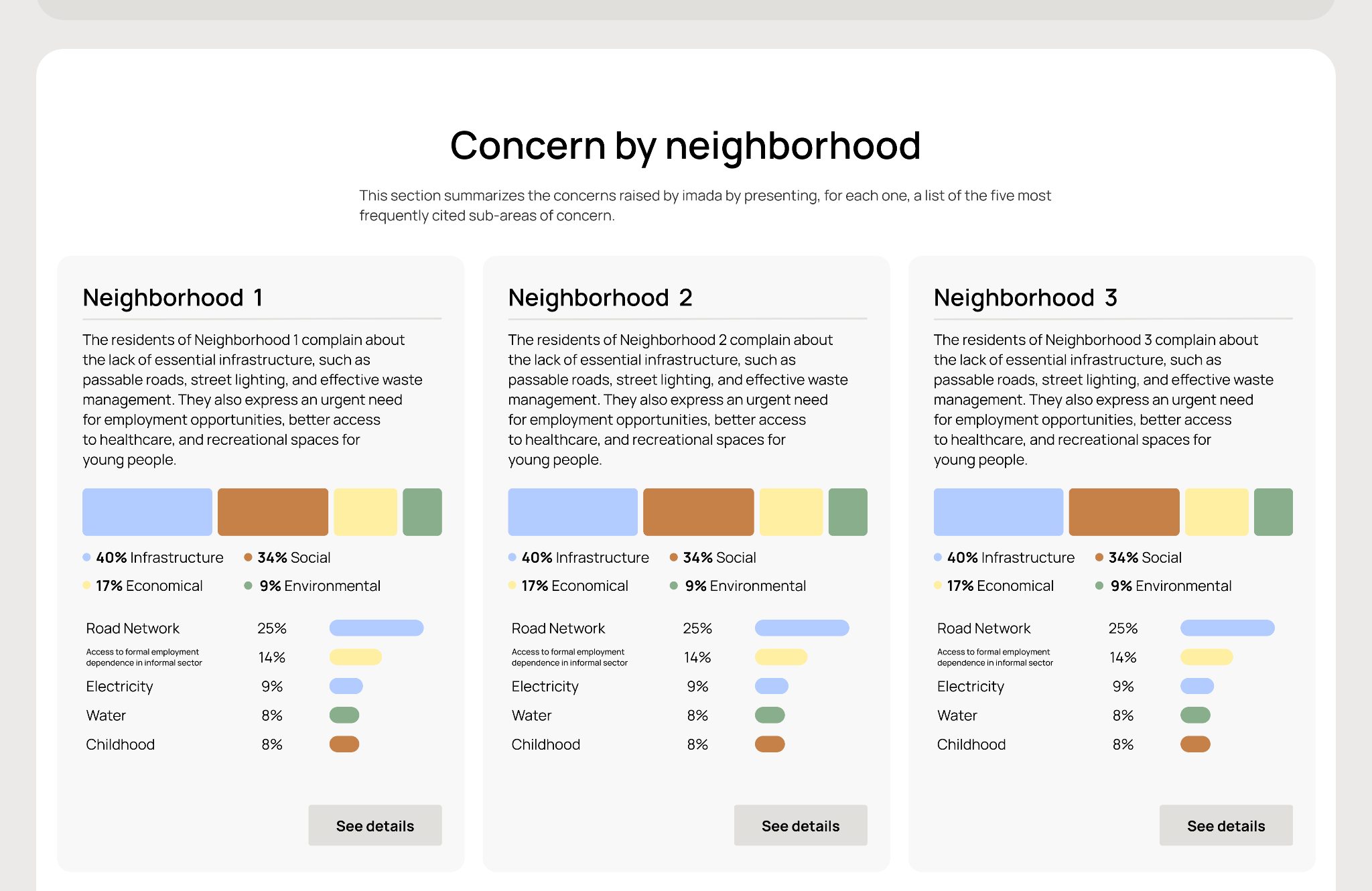
Once the campaign concludes, a full report is generated. Users can download it as a PDF, access the raw data, or explore results directly on the platform using filtering options by neighborhood, gender, age groups, domains and subdomains.
After tests in 4 cities of 20,000 inhabitants each, the system achieves accuracy across demographic precision, concern coverage, area classification, statement accuracy, and depth of detail.
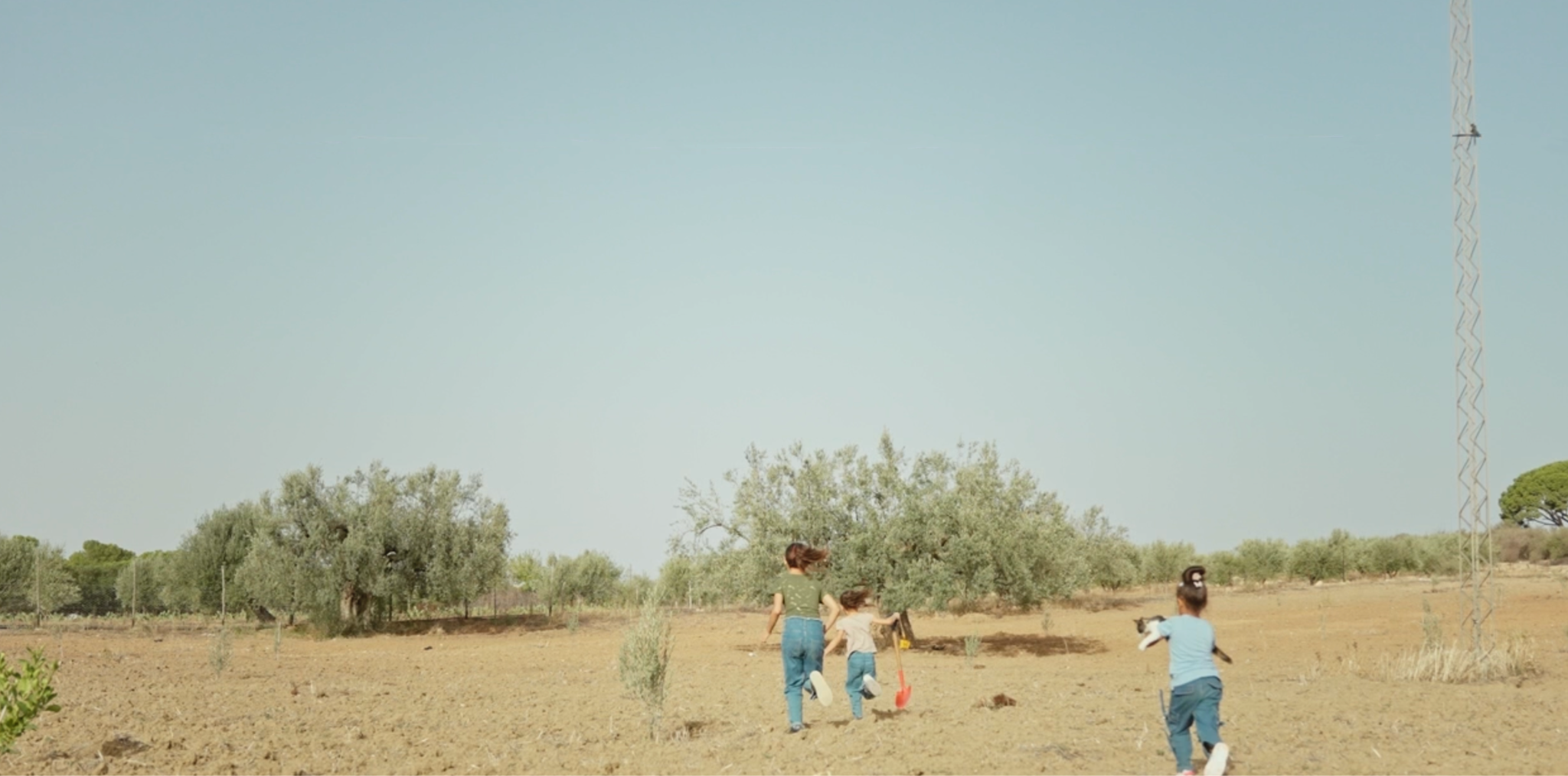
"There is a lack of spaces and activities for children and young people in the region."— Citizen survey, 2025 · 2,542 participants
From tools that tell you what to do.
To tools that tell you what to listen.
From inaccurate top-down data for decision making.
To accurate bottom-up data for decision making.
From simplifying citizen needs and investing in costly solutions.
To finding where minimum investments enable maximum progress.